Genres: Philosophy,

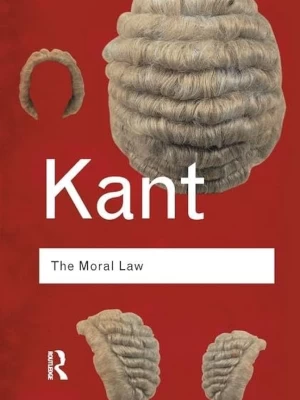
The moral law by Immanuel kant

  No Rating Yet
  No Reviews

Book Overview

In The Moral Law, Prichard argues that moral obligations are self-evident and cannot be proven through reasoning or theoretical systems. He rejects the idea that ethics can be grounded in consequences, utility, or metaphysical principles. Instead, he claims that when we truly understand a moral situation, we immediately recognize what we ought to do.

A central target of Prichard’s work is the tradition of ethical theory that tries to “justify” morality through abstract arguments. He believes this approach misunderstands the nature of moral thinking, which is direct and intuitive rather than derived from general principles.

The essays emphasize moral perception over moral theory, suggesting that ethical knowledge comes from practical awareness rather than philosophical systems.


Read More 

SKU : 0001268

ISBN : 9781032160795

Weight : 0.8

Pages : 0

Language : english

Get Estimated Arrival Time


Kathmandu Kathmandu, Nepal

Estimated Delivery Time 1 to 2 Days


Select book variation

NPR. 632 NPR. 632

You May Also Like

Antifragile

By

Rs. 1280 Rs. 1270

Justice what's the right thing to do ?

By

Rs. 1280 Rs. 1270

The idea of justice

By

Rs. 1280 Rs. 1270

Skin in the game

By

Rs. 1110 Rs. 1120

Re-thinking history

By

Rs. 720 Rs. 720

The rule of metaphor

By

Rs. 1120 Rs. 1120

The use and abuse of history

By

Rs. 1112 Rs. 1112

The archaeology of knowledge

By

Rs. 1272 Rs. 1272

Colonialism and Neocolonialism

By

Rs. 1112 Rs. 1112

A short history of ethics

By

Rs. 1112 Rs. 1112

Content and consciousness

By

Rs. 760 Rs. 760

Sex and repressionin savage society

By

Rs. 1592 Rs. 1592

Madness and civilization

By

Rs. 1272 Rs. 1272

An outline of philosophy

By

Rs. 1432 Rs. 1432

The accumulation of capital

By

Rs. 1560 Rs. 1560

Oppression and liberty

By

Rs. 560 Rs. 560

Human sociey in ethics and politics

By

Rs. 1040 Rs. 1040

History of western philosophy

By

Rs. 1912 Rs. 1912

Napoleon

By

Rs. 1112 Rs. 1112

Capitalism, socialism and democracy

By

Rs. 1592 Rs. 1592

Man for himself

By

Rs. 1112 Rs. 1112

Colonialism/Postcolonialism

By

Rs. 952 Rs. 952

Between man and man

By

Rs. 1080 Rs. 1080

Public administration

By

Rs. 1912 Rs. 1912

In The Moral Law, Prichard argues that moral obligations are self-evident and cannot be proven through reasoning or theoretical systems. He rejects the idea that ethics can be grounded in consequences, utility, or metaphysical principles. Instead, he claims that when we truly understand a moral situation, we immediately recognize what we ought to do.

A central target of Prichard’s work is the tradition of ethical theory that tries to “justify” morality through abstract arguments. He believes this approach misunderstands the nature of moral thinking, which is direct and intuitive rather than derived from general principles.

The essays emphasize moral perception over moral theory, suggesting that ethical knowledge comes from practical awareness rather than philosophical systems.
  • Themes: Moral intuition, ethical obligation, critique of moral theory, self-evidence of duty
  • Academic relevance: Important in Ethics, especially within intuitionist ethics
  • Approach: Analytical and critical, focused on dismantling systematic moral theories
  • Style: Concise, argumentative, and tightly reasoned
  • Influence: Strongly influenced later moral philosophers such as W.D. Ross and debates on prima facie duties
  • Key idea: Moral obligations are known directly, not derived from external theoretical justification
Reviews from our customers