 My
Account
My
Account 
 My
Wishlist
My
Wishlist
Shopping Cart Empty!!
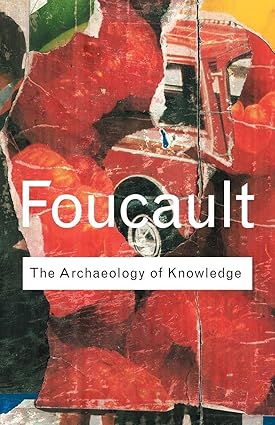
The archaeology of knowledge by Michel foucault
No Reviews
Book Overview
In The Archaeology of Knowledge, Foucault moves away from traditional historical approaches that look for continuity, progress, or unified narratives. Instead, he examines how knowledge is organized and structured at different times, emphasizing discontinuities and breaks rather than smooth development.
Central to the book is the concept of discourse—systems of statements that define what can be said, thought, and known within a particular historical context. Foucault argues that knowledge is not simply discovered but produced through these discursive formations.
He also introduces the idea of the archive, not as a physical collection of documents, but as the underlying rules that determine which statements are possible and meaningful in a given era. His “archaeological” method involves uncovering these rules without relying on traditional assumptions about authorship, intention, or linear history.