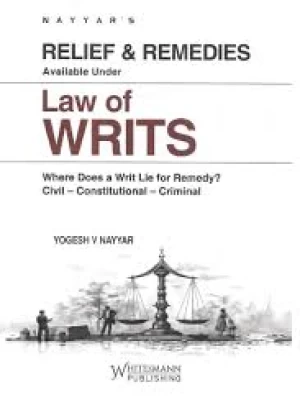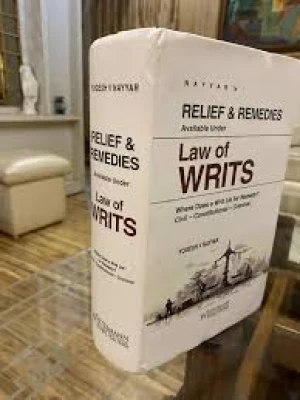
Relief & Remedies Available Under Law of Writs by Yogesh V Nayyar

  No Rating Yet
  No Reviews

Book Overview

The right to constitutional remedies as we know is a guarantor of all other fundamental rights available to the people of India. In addition to the above, the Constitution also provides for the parliament to confer power on the Supreme Court to issue writs, for the purpose of protection of Fundamental rights.

Similarly High Courts in India are also empowered to issue writs for the enforcement of any of the rights conferred by Part III and for any other purpose.

Under the Indian legal system, jurisdiction to issue 'prerogative writs' is given, at present, to the Supreme Court of India and the High Courts of Judicature of all Indian States. Parts of the law relating to writs are set forth in the Constitution of India. The Supreme Court, the highest Court in the country, may issue writs under Article 32 of the Constitution for enforcement of Fundamental Rights, and under Article 139 for enforcement of rights other than Fundamental Rights, while High Courts, the superior courts of the States, may issue writs under Articles 226. The Constitution broadly provides for five kinds of "prerogative" writs: habeas corpus, certiorari, mandamus, quo warranto and prohibition.

Yet another aspect which crops up is amenability & availability of relief and remedies that can be sought for under the writs. Though despite under Article 32 Supreme Court can issue the writs whereas under Article 226 High Court has the authority to issue writs, yet the important factor is what all reliefs can be sought for under Article 226 & Article 227 of The Constitution of India, 1950; in absence of any specific provision of Appeal, & Revision both under Civil & Criminal proceedings is of utmost importance.

The book is written thus with an intent explaining the cases wherein writ petition is maintainable in absence of a specific provision of Appeal, & Revision both under Civil & Criminal proceedings, encompassing the judgments delivered by Hon'ble Supreme Court of India & High Courts.

The book shall be of great help to every Lawyer, Prosecution, and Judiciary and to the entire legal fraternity.

Read More 

SKU : 003432

ISBN : 9788197869921

Weight : 1.10

Pages : 982

Language : English

Get Estimated Arrival Time


Kathmandu Kathmandu, Nepal

Estimated Delivery Time 1 to 2 Days


Select book variation

NPR. 4550 NPR. 4608

You May Also Like

Constitutional Law

By Prithivi Nath Rai

Rs. 475 Rs. 420

V.N Shukla's Constitution of India

By Mahendra Pal Singh

Rs. 1800 Rs. 1800

Judicial Process

By Dr. G. P. Tripathi

Rs. 720 Rs. 680

M P Jain Indian Constitutional Law (Set of 2 Volumes)

By M P Jain

Rs. 8472 Rs.

Preamble: The Spirit and Backbone of the Constitution of India

By Justice R.C. Lahoti

Rs. 792 Rs. 790

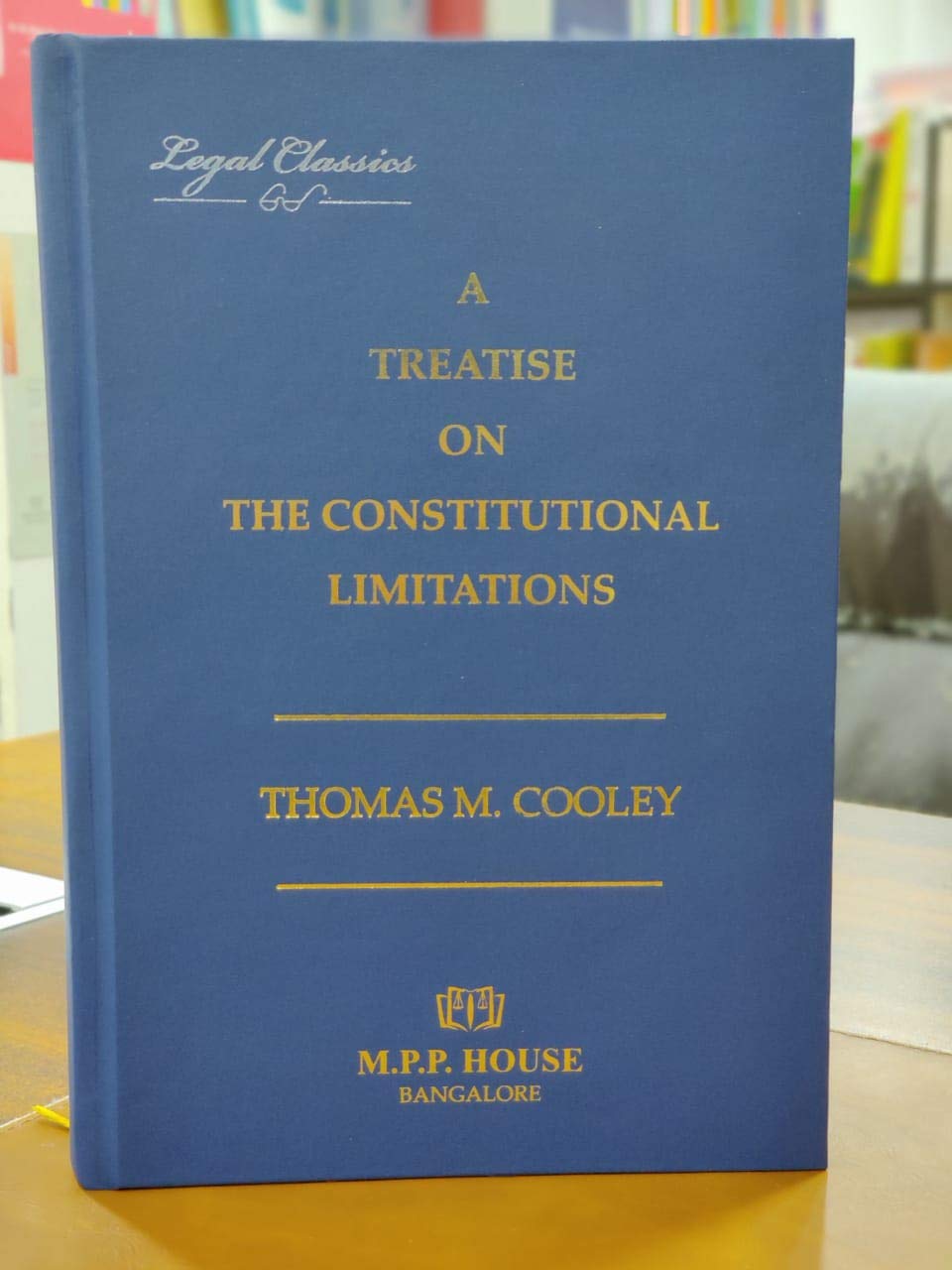
A Treatise on the Constitutional Limitations

By Thomas M Cooley

Rs. 2238 Rs. 2230

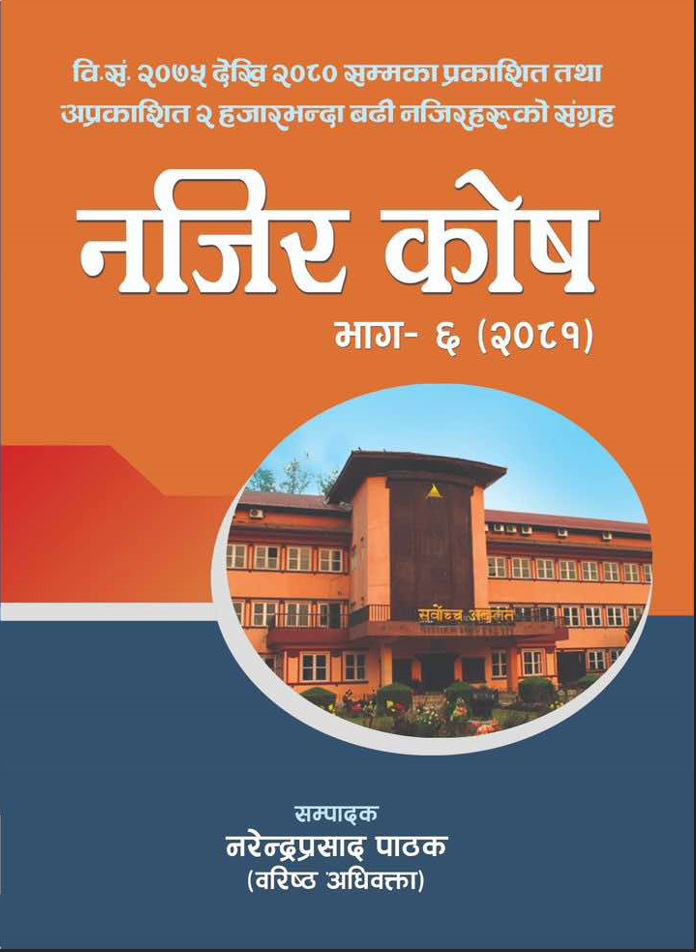
Najir Kosh Bhag 6 (2081)

By

Rs. 1695 Rs. 1360

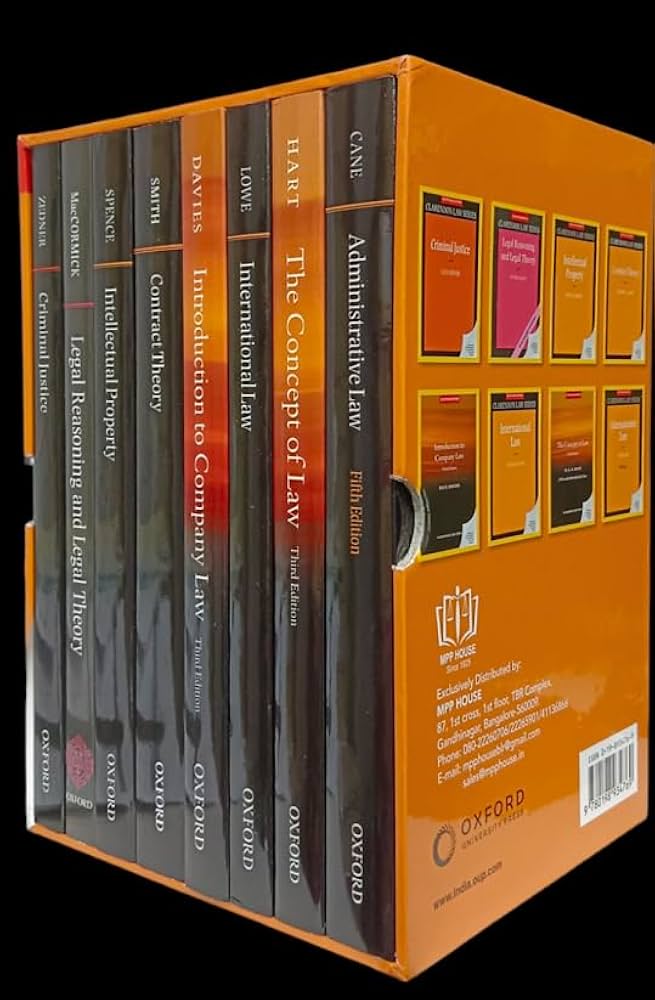
Clarendon Law Series (8 Volumes)

By

Rs. 15998 Rs. 15500

Constitutional Choices

By

Rs. 1120 Rs. 1090

Introduction to the study of the Law of the Constitution

By

Rs. 1432 Rs. 1400

Indian Constitutional Law

By

Rs. 3672 Rs. 3610

Eraskine May: Parliamentary Practice

By

Rs. 11192 Rs. 10949

Constitutional Ideals – Development and Realisation Through Court-led Justice

By

Rs. Rs.

Constitutions of the World

By

Rs. 6392 Rs. 6300

B.R. Agarwala's Supreme Court Practice and Procedure

By

Rs. 2552 Rs. 2540

Constitutional Law

By

Rs. 825 Rs. 660

संवैधानिक र प्रशासकीय कानुन (Constitutional and Administrative Law)

By

Rs. 1495 Rs. 1196

नेपालमा निर्वाचन प्रणाली (Electoral System in Nepal)

By

Rs. 1095 Rs. 876

देवानी कानूनकाे परिचय (Introduction to civil Law)

By

Rs. 1195 Rs. 956

Constitutional Principles

By

Rs. 760 Rs. 760

Constitutional Law

By

Rs. 1512 Rs. 1512

Constitutionalism & The Rule of Law

By

Rs. 2872 Rs. 2872

Najir Kosh - 5 (Hard Bound)

By Senior Advocate Narendra Prasad Pathak

Rs. 1500 Rs. 1200

Judicial Process

By Dr. G. P. Tripathi

Rs. 720 Rs. 680

Landmarks in the Law

By Lord Denning

Rs. 1272 Rs. 1272

Essential Supreme Court Decisions

By

Rs. 2080 Rs. 2050

Scalia's Court

By

Rs. 2080 Rs. 2050

Reflections on Judging

By

Rs. 1438 Rs. 1400

Landmark Judgment 3rd Edition

By

Rs. 0 Rs. 0

Landmark Judgments on Human Rights

By

Rs. 360 Rs. 320

The Art of Writing Judgments

By

Rs. 1752 Rs. 1710

Practical Hints on Cross Examination

By

Rs. 6712 Rs. 6685

The right to constitutional remedies as we know is a guarantor of all other fundamental rights available to the people of India. In addition to the above, the Constitution also provides for the parliament to confer power on the Supreme Court to issue writs, for the purpose of protection of Fundamental rights.

Similarly High Courts in India are also empowered to issue writs for the enforcement of any of the rights conferred by Part III and for any other purpose.

Under the Indian legal system, jurisdiction to issue 'prerogative writs' is given, at present, to the Supreme Court of India and the High Courts of Judicature of all Indian States. Parts of the law relating to writs are set forth in the Constitution of India. The Supreme Court, the highest Court in the country, may issue writs under Article 32 of the Constitution for enforcement of Fundamental Rights, and under Article 139 for enforcement of rights other than Fundamental Rights, while High Courts, the superior courts of the States, may issue writs under Articles 226. The Constitution broadly provides for five kinds of "prerogative" writs: habeas corpus, certiorari, mandamus, quo warranto and prohibition.

Yet another aspect which crops up is amenability & availability of relief and remedies that can be sought for under the writs. Though despite under Article 32 Supreme Court can issue the writs whereas under Article 226 High Court has the authority to issue writs, yet the important factor is what all reliefs can be sought for under Article 226 & Article 227 of The Constitution of India, 1950; in absence of any specific provision of Appeal, & Revision both under Civil & Criminal proceedings is of utmost importance.

The book is written thus with an intent explaining the cases wherein writ petition is maintainable in absence of a specific provision of Appeal, & Revision both under Civil & Criminal proceedings, encompassing the judgments delivered by Hon'ble Supreme Court of India & High Courts.

The book shall be of great help to every Lawyer, Prosecution, and Judiciary and to the entire legal fraternity.
Format: Hardback

Publisher: Whitesmann

Language: English

ISBN: 9788197869921

Reviews from our customers